

- News & Events



Advanced catalytic technologies centered on catalytic materials and high-efficiency catalysts have become a key research focus and a strategic technological high ground that countries around the world and multinational corporations are competing to explore. In August 2022, the "Fenjin Group" (Progress Team) from the School of Chemical Engineering at Xi'an Jiaotong University visited the Xi'an office of Shanghai Diyang Chemical Import and Export Co., Ltd. for a three-week corporate internship, during which they gained profound insights and valuable experiences.
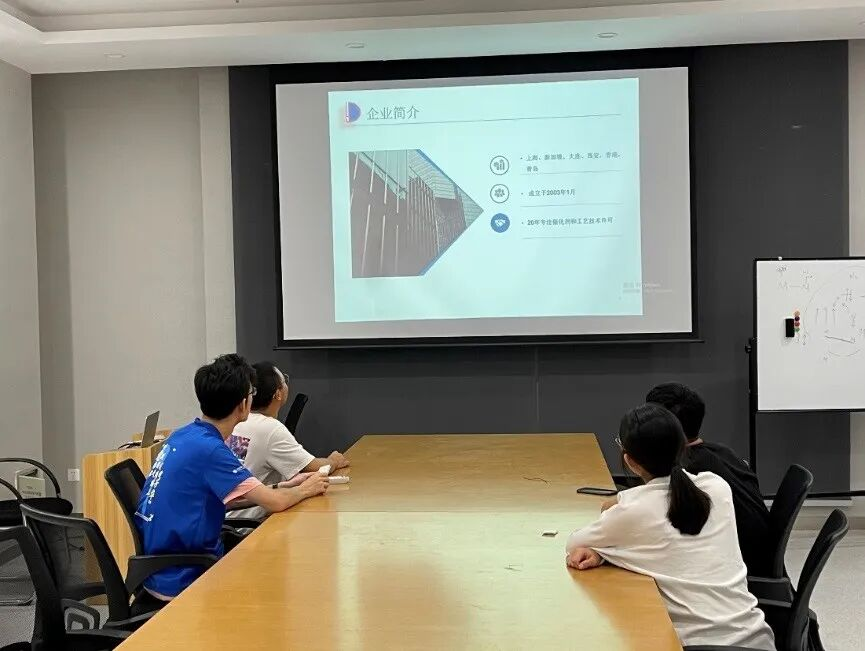
Shanghai Diyang Chemical Import and Export Co., Ltd. was established in February 2003, with its headquarters in Shanghai and two branch offices in Xi'an and Dalian. The company exclusively distributes the chemical catalyst business of Engelhard Corporation (USA) in China. The BASF catalyst products it distributes include both single and multi-component composite catalysts based on various metals such as titanium, nickel, aluminum, copper, zinc, manganese, palladium, rhodium, ruthenium, and gold. These products are widely used in the production of chemicals, polymers, solvents, white oils, plastics, pharmaceuticals, detergents, edible oils, and other products. The company also assists BASF in developing customized catalysts according to customer requirements. Since its inception, with the support of domestic and international clients, our business has continuously expanded to cover areas including catalysts, pharmaceutical intermediates, precious metal recycling, advanced chemical processes and equipment. We have established long-term cooperative relationships with internationally renowned companies such as BASF, Sabin, Zeochem, and Lanxess, and maintain close communication with prestigious domestic research institutes such as the Chinese Academy of Sciences and the Sinopec Research Institute of Petroleum Processing (RIPP), committing ourselves to technological innovation and product development.
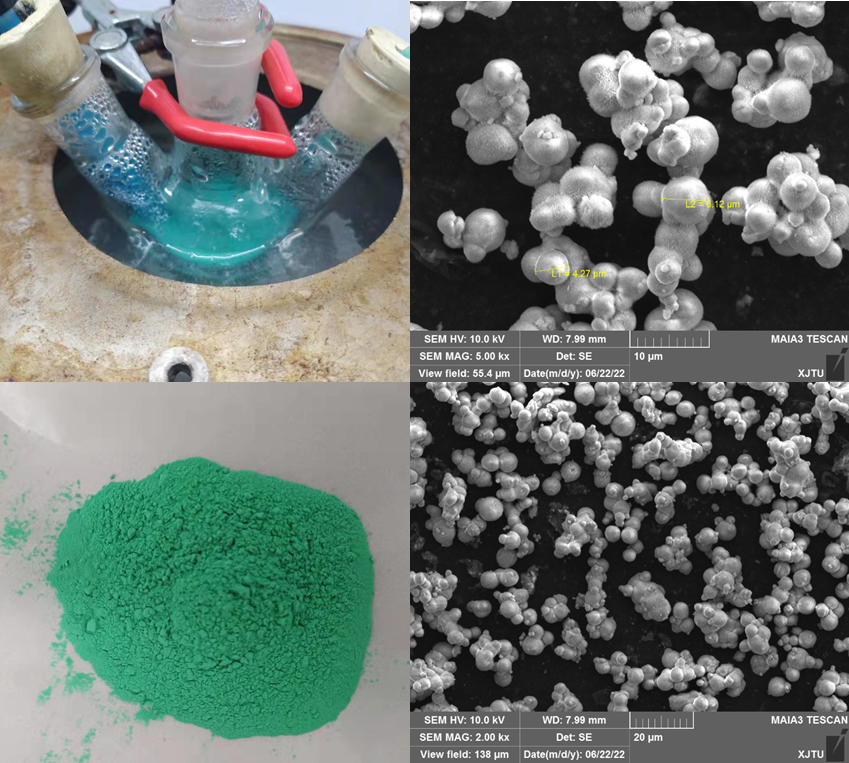
During the internship, the group members' practical project was set against the background of the alkyne-aldehyde reaction in industrial processes, focusing on industrial catalysts for this reaction. The main practical work involved investigating how the preparation conditions of basic copper carbonate affect its structure, and using catalyst evaluation test equipment to measure the performance of different alkyne-aldehyde reaction catalysts, comprehensively assessing catalyst performance in terms of conversion rate, selectivity, and product quality. The students designed experimental plans for preparing alkyne-aldehyde catalysts, studied the effects of reactants and concentrations on catalyst morphology and particle size distribution, and used different copper salts, bismuth salts, and some active components to test catalyst performance changes after the reaction. Under the guidance of our company's experimental technicians, the students learned the working principles and operating methods of the equipment, and gained practical experience in equipment operation and management during the subsequent training. Through this internship, the students not only gained an understanding of the current R&D status of advanced chemical technologies, but also developed a preliminary awareness of our company's work processes and management practices.
Through this internship, the students systematically mastered the principles of unit operations involved in chemical production, the structural characteristics of various types of unit operation equipment, the layout principles of chemical production process flows, as well as the working principles and usage methods of commonly used testing and control instruments. The internship enhanced the students' perceptual understanding of professional knowledge, cultivated their ability to integrate theory with practice, and improved their skills in analyzing practical problems and creatively solving industrial production challenges. At the same time, it helped them develop the qualities of perseverance and innovative endeavor, and boosted their professional competitiveness in the field of catalysis.
Team leader Zhang Tao remarked: "On this broad platform of a chemical enterprise, I have encountered many people and matters, and clearly felt the difference between the company's atmosphere and that of the university." Group member Luo Decun shared: "Through three weeks of visits and learning, I came to know and understand many experimental devices used in the chemical field, learned their operating principles, usage methods, and precautions, and deeply realized the gap between theoretical knowledge and actual production practice. It is essential to combine theory with practice. The chemical industry is closely linked to the nation's future development, and every chemical professional should strive diligently. As a master's student in chemical engineering, I should be even more motivated to excel in my own research field and contribute my share."
In recent years, fundamental research in catalytic technology in China has developed rapidly, with catalyst characterization and catalytic mechanism studies reaching internationally advanced levels. A large number of major technological breakthroughs have been achieved in fields such as petroleum refining, petrochemicals, and biochemical engineering, and the industrial production of related catalysts has begun to take shape. Our company will continue to value cooperation with universities, provide internship and practice platforms for more outstanding students, and jointly promote the deep integration of talent cultivation and technological innovation in the chemical industry.

 021-3392-6898
 dy@diyangchem.com
 Rooms 1606-1607, Shanghai Information Building, No. 1403 Minsheng Road, Shanghai
